Parker Metal Zinc Plating

Greensboro, North Carolina · 40+ years in business

Zinc plating is
all we do.

Family owned and plating zinc for over 40 years. The expertise, skill, and reputation have only grown. Rack and barrel work to ASTM, military, and your own specs, back to you in about seven days.

Since 1980 ASTM B633 Trivalent + Hexavalent RoHS Compliant Rack + Barrel ~7 Day Turnaround
1980
Founded by Jack Parker. A family trade, handed down through the generations.
100%
Zinc focused. One process, done right.
~7 days
Typical turnaround. Expedite available.
ASTM/Mil
Plated to spec on every order.

Our services

Rack and barrel zinc electroplating

Two lines under one roof. We match the method to your part so the finish is even, the threads stay clean, and the parts arrive ready to use.

For volume and fasteners

Barrel zinc plating

Best for high counts of small parts: fasteners, stampings, wire goods, and formed pieces. Parts tumble in the barrel for uniform coverage at a competitive price.

  • High volume runs and one time orders
  • Generous spot check inspection on every lot
  • Trivalent and hexavalent chromate options
For sensitive and complex parts

Rack zinc plating

For parts that cannot tumble, or where appearance and detail matter. Each part is fixtured, plated, and handled individually.

  • Large, intricate, or appearance critical parts
  • Every part individually inspected
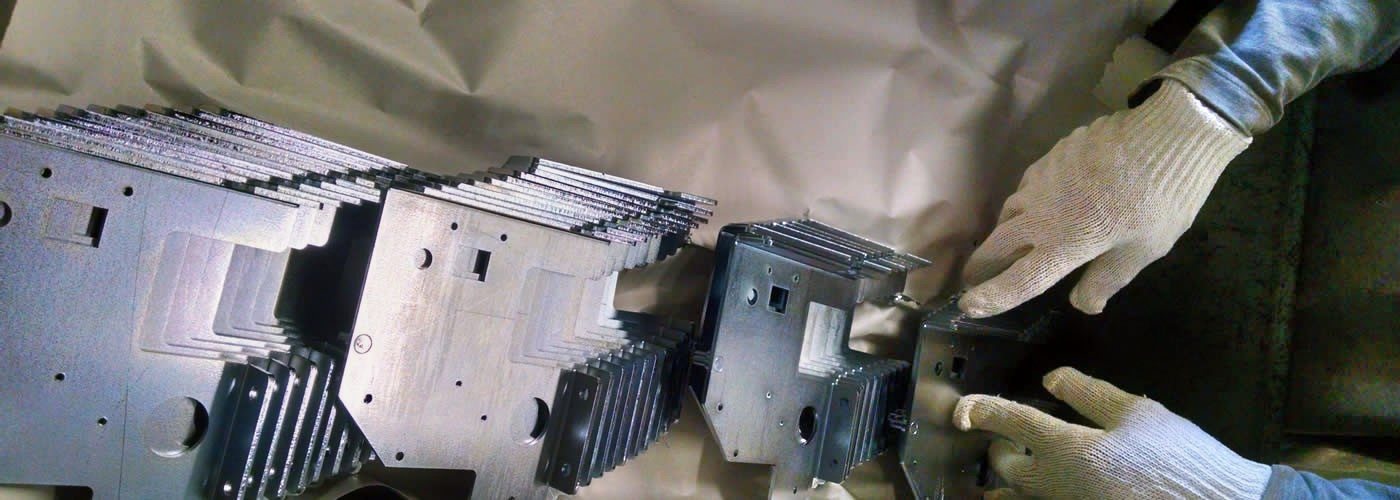
  • Wrapped in kraft paper so it arrives as it left

A family trade since 1980

Run by hand, watched at every tank

Parker has plated zinc in Greensboro since 1980, more than four decades at the same trade. The shop is family owned, and the work has been handed down through the generations. The platers reading the bath today learned it from the people who built the place.

Most of the industry automated to chase volume. Set a program, load the line, walk away. Parker kept a person at the controls. Our platers watch the bath and the part as the work moves, and they call current, time, and chromate by what they see. When something looks off, a trained eye catches it at the tank, well before it reaches your floor.

An automated line hands you whatever comes off it at the end. Parker hands you a finished product that an experienced plater has watched and judged at every step. That kind of knowledge is built over years at the tank and passed from one generation to the next, and a programmed line does not reproduce it. It is why shops send us their sensitive parts and the jobs that have to come back right.

Parker Metal Finishing · Greensboro, NC

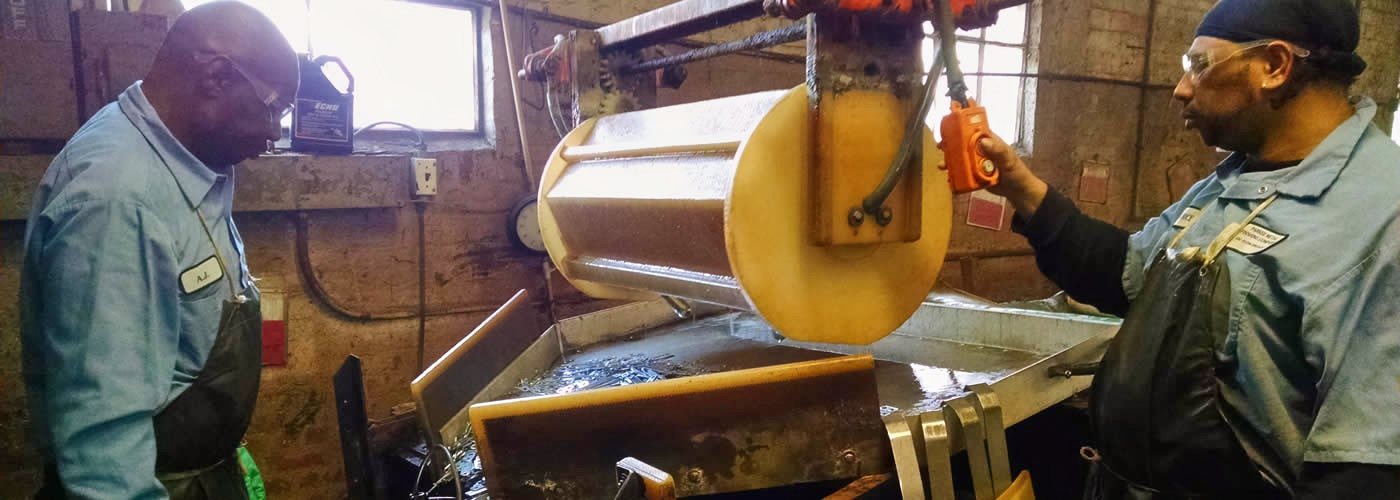
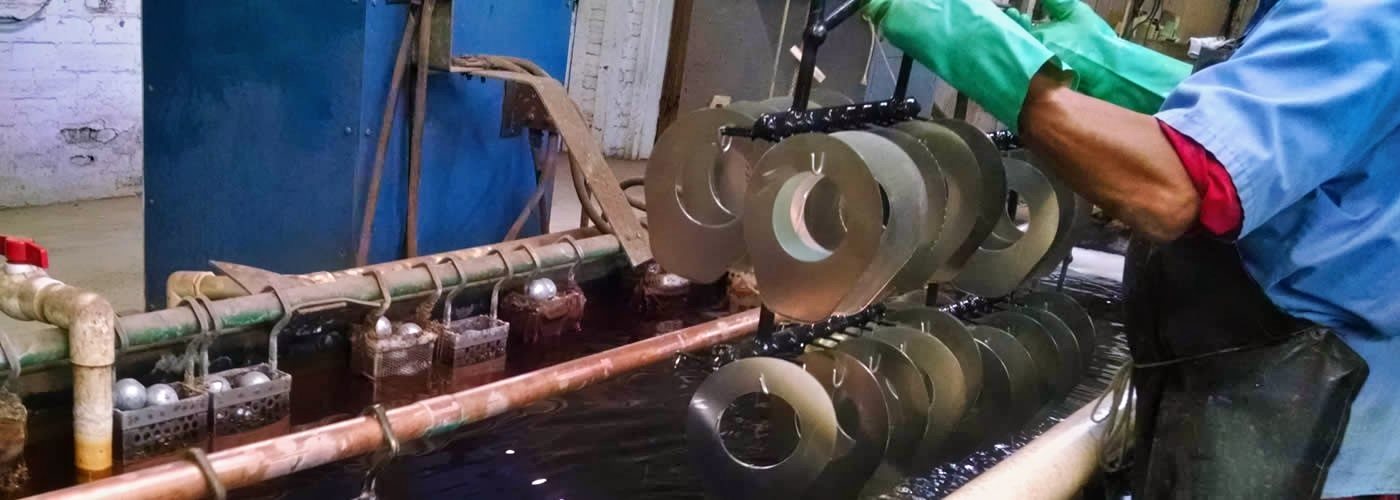
A Parker Metal Finishing plater running zinc parts by hand at the plating line

The Parker difference

Why craftsmanship beats automation

Most of the industry plates by robot. We kept a person at every tank. Here is the difference laid out side by side, plus a podcast on the history, the chemistry, and the values behind doing this work by hand.

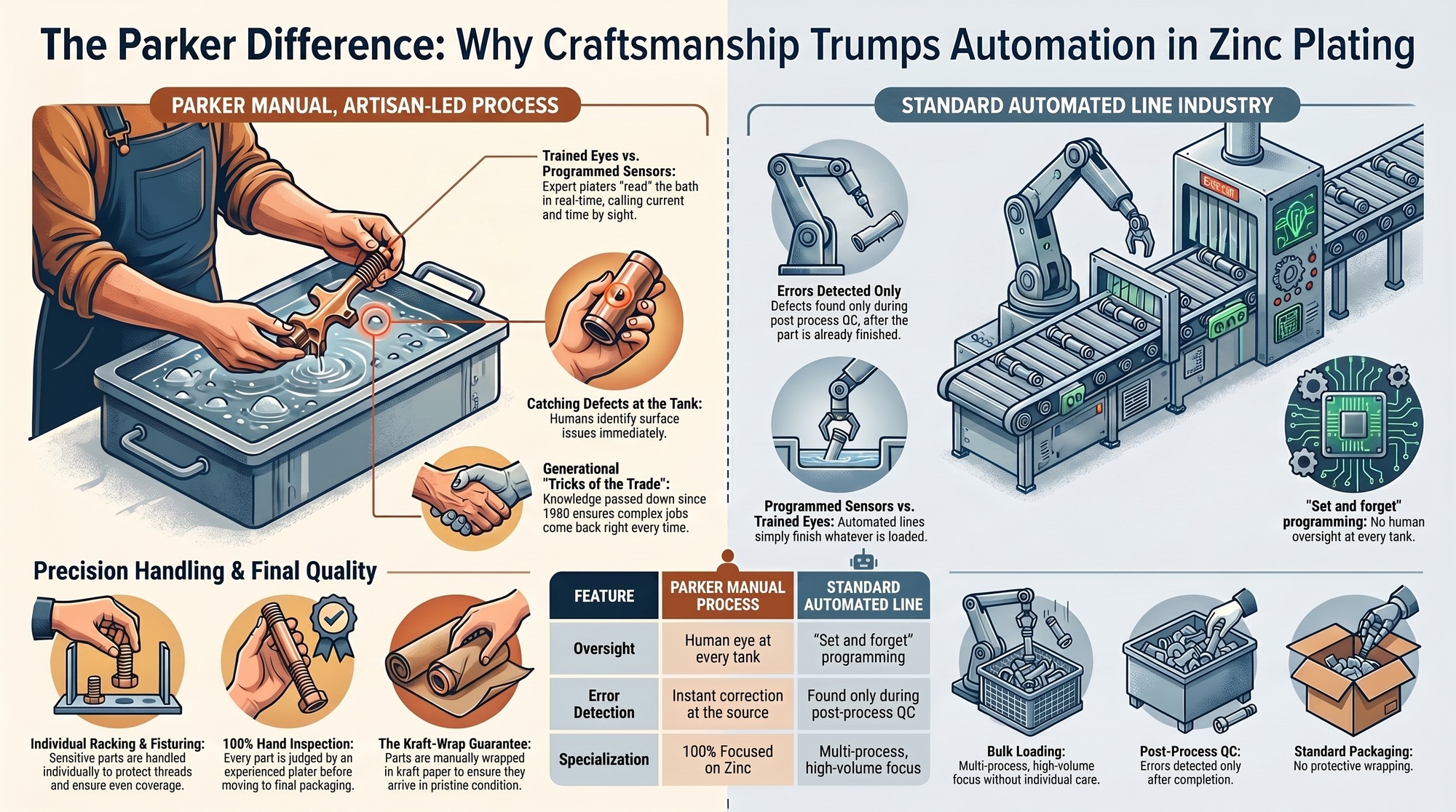
Infographic, The Parker Difference. On the left, Parker's manual, artisan-led zinc plating: a plater reads the bath by eye and calls current and time by sight, catches surface defects at the tank, racks and fixtures each part individually, hand inspects 100 percent of parts, and wraps finished parts in kraft paper. On the right, a standard automated line runs on set-and-forget programming with no human at the tank, detects defects only in post-process quality control after the part is finished, bulk loads parts, and ships with no protective wrapping. A table compares the two: oversight is a human eye at every tank versus set-and-forget programming, error detection is instant correction at the source versus errors found only in post-process QC, and specialization is 100 percent focused on zinc versus multi-process high-volume.
The Parker difference: a manual, artisan-led process compared with a standard automated plating line.
Listen · Podcast

Why Parker Metal Finishing does it by hand, not by machine

A deep dive into the history of the shop, the chemistry of zinc plating, and the case for keeping human hands on the work. Family history, education, and the values behind the trade, in about nineteen minutes.

Press play below to start. Nothing plays on its own.

Audio, about 19 minutes. Prefer to read? The full transcript is below.

Read the full transcript

Imagine walking into a modern industrial factory today. You probably have a very specific picture in your head: rows of completely silent robotic arms, laser-guided sensors tracking everything, AI dashboards predicting microscopic flaws before they even happen. For 99 percent of the high-volume manufacturing world, that is exactly what you get. We have been conditioned to believe that true precision means getting human hands as far away from the product as possible. The assumption is that the machine is a flawless constant and the human being is a dangerous variable. Humans get tired. They get distracted by a noise on the floor, or they blink. So modern engineering says eliminate the variable and let the code run the line.

But today we are taking you inside a massive operation that looks at all that shiny automated machinery and basically says, no thanks, we will use our hands. We are looking at a family-run shop called Parker Metal Finishing, in Greensboro, North Carolina. In an era where every competitor is rushing toward full automation, they have thrived for 46 years by doing high-volume, highly volatile industrial plating manually, by hand. They planted their flag on Gate City Boulevard back in 1980, and they decided to ignore the industry's obsession with robots. They chose to perfect one single grueling physical process instead.

It is a process you interact with every day, even if you do not realize it. Think about the hinges on your front door, the heavy bolts in your car's engine, the latches on an airplane overhead bin. We expect those metal pieces to work. We rarely stop to think about the intense chemical processes required to keep those base metals from rusting away into powder in a few months.

Plating is not just dipping steel into a bucket of metallic paint. At its core, it is a technique where you take a base part, the substrate, and bond a microscopically thin layer of another metal directly to it. You are building a permanent molecular shield around a vulnerable piece of steel. The primary way to build that shield is electroplating, which works like a battery running in reverse. A power source pumps current into a liquid system. You have an anode, a solid chunk of your plating metal, say zinc, which is positively charged, and a cathode, the work piece you want to protect, which is negatively charged. That liquid is an electrolyte bath. When you flip the switch, the current rips metal atoms off the zinc anode, they dissolve into the solution, travel across the liquid, and slam into the negatively charged part, bonding to its surface. The voltage is forcing a new metallic skin to grow on the part.

There are other methods. Electroless, or autocatalytic plating, removes the external power source and relies on a self-sustaining chemical reaction, which is popular in extreme environments like marine engineering. Immersion plating is mostly used for noble metals like gold or platinum. But Parker does not use those, and the electroplating they do is anything but delicate. You cannot toss a dirty, greasy bolt into an electrified vat and hope for the best. If there is even a microscopic fingerprint of oil on the steel, the zinc will not bond. The current hits that oil, the plating blisters, and the part rusts months later. So the pre-treatment is intense, and after plating you still have to lock in the finish with post-treatment rinsing.

If this process involves acid baths, chemical steam, and precise electrical currents, a human hand seems dangerous. In 2026, why not enclose the whole toxic process in glass and let an algorithm handle the voltage? To understand why they do not, look at how parts are physically handled. First is barrel plating: you put thousands of small, durable parts, like screws, inside a large perforated barrel that rotates inside the bath, tumbling the parts for uniform coverage, a massive industrial rock tumbler for rust protection. Then, for larger or more delicate parts, you use rack plating, where you hang intricate pieces individually on a custom frame. That gives exact control over how the part drains when it comes out, which matters because of the drag-out rate, how much expensive, hazardous solution the part pulls out of the tank.

In the vast majority of the industry, both methods are completely automated. A technician loads the parts, punches a program into a keypad, and walks away. Automated hoists lift the racks, automated rails move them over the tanks, and the computer lowers them, times the bath, and applies the current. Completely hands off. This is where Parker breaks the mold. When Jack Parker founded the shop in 1980, the industry was already chasing automation. As competitors bought robots, Parker kept a human being at the controls of every single tank. They manually operate the hoists and manually set the voltage. And Parker is not a boutique shop doing small batches. They process commercial runs for the entire Southeast, taking in tractor trailers full of raw metal from Virginia, Georgia, Tennessee, and Alabama, and turning them around in a typical seven-day window.

Surely a camera and AI could do this faster and safer than a person on their feet for eight hours. But AI is rigid. It relies on a fixed set of parameters, and plating is incredibly dynamic. The chemical composition of a thousand-gallon tank constantly fluctuates as you run parts through it. The factory temperature shifts. The steel parts have slight variations in their makeup. A computer program is blind to that context. It just follows the recipe: lower the hoist for exactly 12 minutes at exactly 5 volts, even if the tank is running unusually hot that day. It is like baking bread. A programmed oven bakes for 30 minutes and does not care that it is a humid day, so the bread comes out gummy. An expert baker watches the dough, sees how it is rising, and pulls it out at the exact right second.

In the industry, they call this reading the bath. At Parker, the human platers physically watch the metal as it moves through the liquid. They watch the rate of hydrogen bubbles breaking the surface, which tells them about electrical efficiency. They look at the hue of the liquid. They use trained eyes to adjust the current and the time on the fly. An automated line hands you whatever comes off it at the end, flaws, burns, and uneven coatings included. A human eye catches a slight chemical imbalance right there at the tank, before a single ruined part ever makes it to a shipping box.

To read a bath with that level of intuition, you cannot be a jack of all trades. Parker ignores all the other metals. They are not dabbling in gold or silver or tin. They are 100 percent focused on zinc electroplating. One process, done right. Zinc is the backbone of industrial corrosion protection. The industry keeps advancing specialized alloys designed to beat standard zinc, like zinc nickel, roughly 14 percent nickel and 86 percent zinc, which can provide up to ten times the protection of conventional zinc and is replacing toxic cadmium in high-stress environments like brake calipers and aerospace connectors. But applying that alloy is expensive and requires specialized chemistry. What is fascinating is that Parker hits brutal industry targets, measured in salt spray hours to white or red rust, using pure zinc.

The way they do it is through chromate conversion coatings. When you plate zinc onto steel, the zinc layer is somewhat porous at a microscopic level. A chromate is a chemical sealer applied over the zinc that seals those pores and passivates the metal, telling it to stop reacting to oxygen and moisture. Parker applies these passivates by hand to meet rigorous standards like ASTM B633 and strict military protocols. They offer trivalent yellow, a gold iridescent finish, and getting that gold color is not a switch you flip. If the tank is too cold, the yellow shifts toward a sickly green. An automated timer would not catch that, but a human plater sees the tint shifting, adjusts the time, and saves the batch. All of Parker's trivalent options are RoHS compliant. They also do trivalent clear, a bright blue-silver finish you have seen on the shiny bolts in furniture hardware, and trivalent black, a deep black accent for decorative but functional parts. They still offer hexavalent yellow too, which is not RoHS compliant, because certain legacy military and industrial contracts drawn up decades ago still require it by law.

How does a business survive 46 years doing this, when the labor is harder, the training is intense, and competitors can press a button and let a robot run around the clock? They survive on generational knowledge. The platers reading the bubbling baths today learned directly from the people who built the shop in 1980. You cannot turn when the yellow looks slightly green, pull it out into a line of code. A programmed line simply cannot reproduce generational intuition, and it takes years to train an eye to read an acid bath. Their clients value that intuition over automated speed. Parker is the backbone for machine shops, heavy metal stampers, fabricators, defense, and automotive. When you are plating components for military vehicles or cars going 70 miles an hour, good enough does not cut it.

The customer loyalty is rare. K and S Tool and Manufacturing has sent parts to Parker for over 30 years and points out that Parker stands by their delivery times. Mike Niten, a six-year customer, relies on competitive pricing and direct service. Brian Loush from Ebway LLC, a 15-year customer, highlights the clear, timely updates, because when humans run the floor, you get actual human communication when you call to check on a massive order. You are not just staring at an automated tracker on a website.

One small detail captures the whole philosophy: kraft paper. Whether it is a spot check on a barrel run of thousands of fasteners or an individual inspection of a sensitive rack-plated aerospace part, Parker wraps the finished products in kraft paper before they leave. They do not dump a thousand freshly plated bolts into a cheap plastic bin. They physically wrap them, so the part arrives at the customer's dock exactly as pristine as the second it left the tank. It says human hands made sure this chemistry was right, and human hands protected it until you received it.

Metal plating is not just dunking parts in a wash basin. It is an intense, chemically hazardous, highly technical ballet of electricity and acid, defined by microscopic variables: drag-out rates, sacrificial properties, salt spray hours. And yet Parker proves that even in an environment that seems custom built for robotic automation, the single most critical variable is human attention. We live in a society obsessively chasing total automation, operating on the assumption that the human element is a flaw to engineer out. But when you look at Parker thriving against the automated tide for 46 years, you have to reconsider that logic. Is the human element a flaw, or is human intuition the irreplaceable luxury that guarantees true quality? Maybe the true mark of precision is not a flawless surface untouched by human hands. Maybe it is knowing that a pair of human hands were there, guiding the process all along.

Four decades of zinc plating

The parts we plate every week

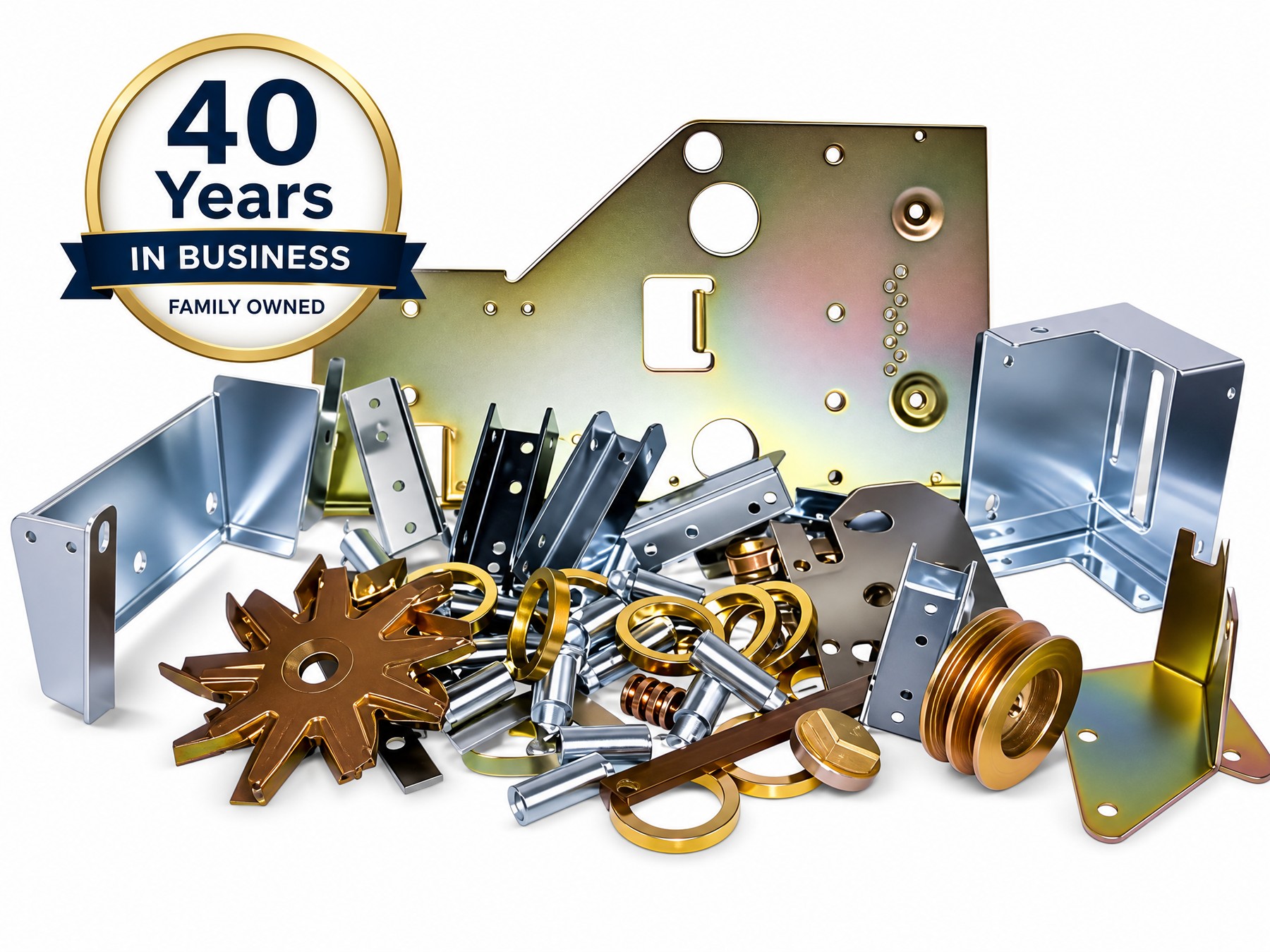
Forty years in business, family owned. Yellow, clear, and black zinc plated brackets, stampings, and hardware from Parker Metal Finishing in Greensboro, NC

Inside the shop

From our lines to your loading dock

Barrel and rack plating, hand inspection, kraft wrapping, and shipping, all under one roof in Greensboro.

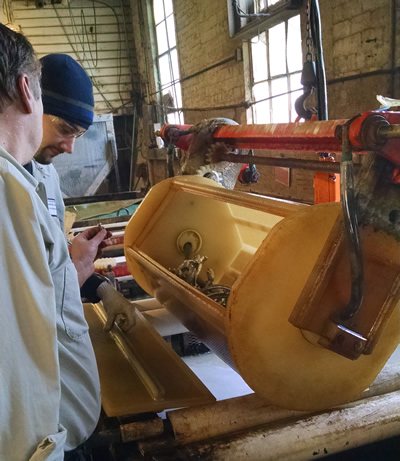
Barrel zinc plating line at Parker Metal Finishing in Greensboro, NC
Barrel plating line
Hand inspection of zinc plated parts at Parker Metal Finishing
Hand inspection
Zinc plated parts kraft wrapped for shipping at Parker Metal Finishing
Inspected and kraft wrapped
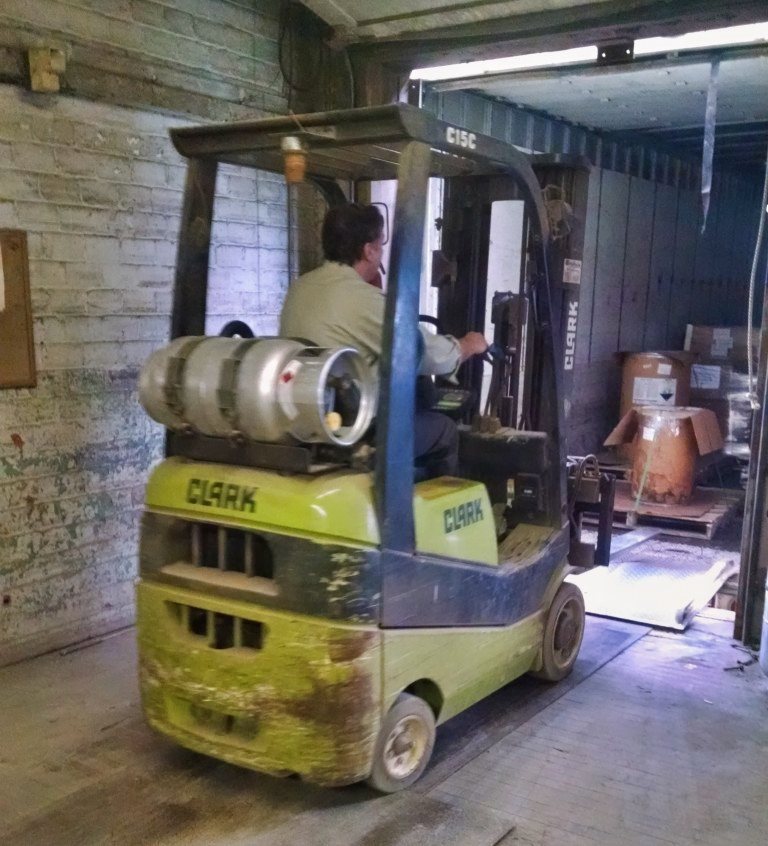
Loading dock at Parker Metal Finishing, forklift moving plated parts
Out the loading dock
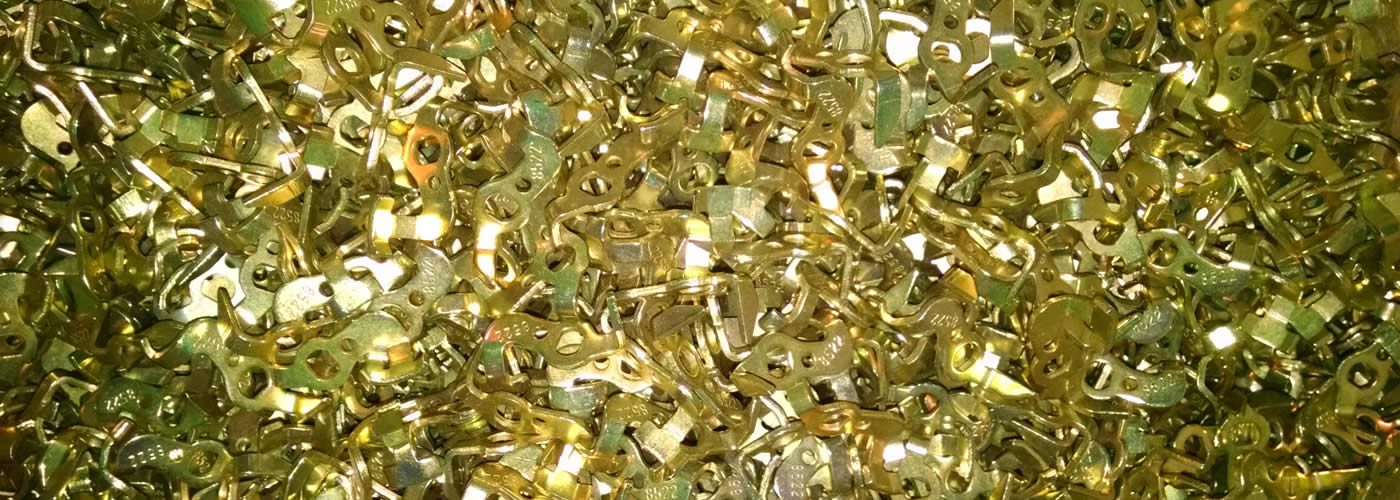
Yellow chromate zinc plated parts finished at Parker Metal Finishing
Yellow chromate parts
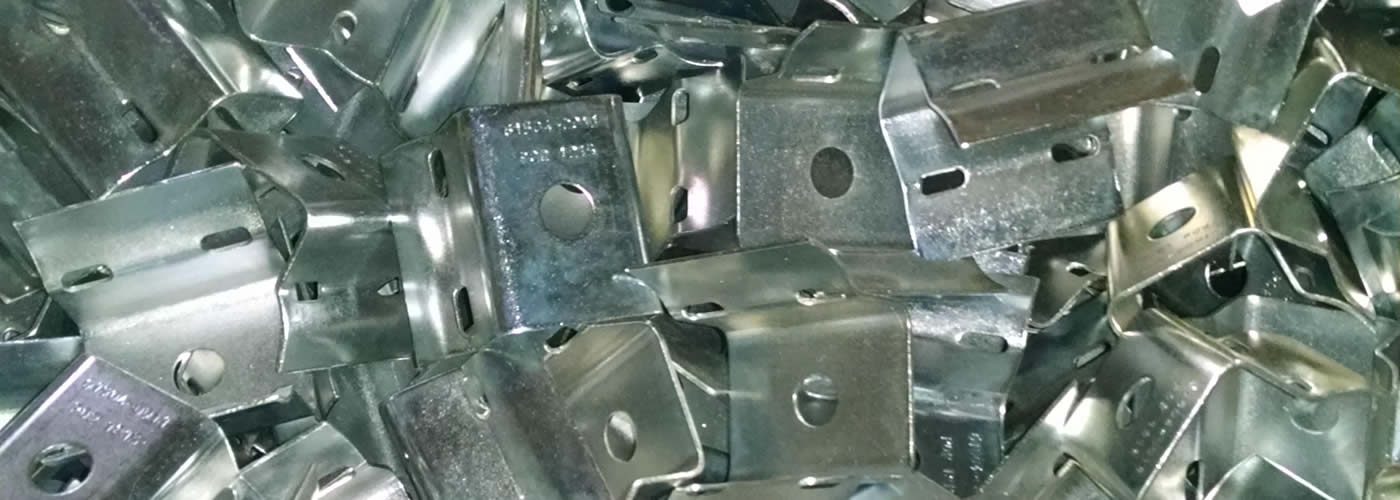
Clear zinc plated parts finished at Parker Metal Finishing
Clear zinc parts

Specs and compliance

We plate to your spec and your quality system

Send your specification and your corrosion target and we plate to meet it, then document the work. Most of our customers run their own ISO and quality programs, and we plate to those requirements so the parts drop straight into your process. Tell us the salt spray hours to white or red rust you need and we set the zinc thickness and chromate to hit it.

ASTM B633 Military specs Customer prints RoHS compliant Works under your ISO
Capability SummaryREV. 2026
ProcessElectrolytic zinc, alkaline + acid chloride
LinesRack & barrel
PassivatesTrivalent + hexavalent
ColorsYellow / clear / black
Turnaround~7 days, expedite available
InspectionIn-process + final, kraft wrap
ShippingDocks for trailers + pickups

How it works

From quote to your dock in about a week

01

Send the RFQ

Part, finish, spec, and quantity. Use the form or call.

02

Ship or drop off

Our docks take tractor trailers and pickups alike.

03

We plate to spec

Rack or barrel, matched to your part and corrosion target.

04

Inspect and wrap

Checked for quality, then kraft paper wrapped.

05

Back to you

Typically within seven days, faster when you need it.

Watch and learn

Zinc Plating Education

Start with our own explainer on the art and science of zinc plating, then go deeper with a couple of outside videos on the process and the parts.

Zinc Plating: Art & Science Featuring Parker Metal Finishing · about 9 minutes
Read the full transcript

Welcome to The Explainer. Today we are exploring a truly fascinating intersection: the exact point where microscopic chemistry meets meticulous human craftsmanship. We are diving deep into the world of metal finishing, specifically zinc electroplating. It is an incredible space where an invisible flow of electrons is harnessed by skilled artisans to protect the industrial and mechanical hardware that you and I rely on every single day.

Have you ever wondered how delicate steel parts, like the precision-cut threads of an aerospace bolt or the intricate brackets under the hood of a classic car, survive the harshest, wettest environments without instantly crumbling into rust? Bare steel is notoriously vulnerable. Expose it to a little moisture and it rusts quickly. So how do we shield it while maintaining its exact, millimeter-perfect dimensions? The answer is zinc.

Here is the road map for today. One, why steel needs zinc. Two, how zinc plating works. Three, the problem with automation. Four, the Parker hand-plating method. And five, passivation and final finishes.

Applying a zinc coating changes how steel interacts with its environment in two distinct ways, like a two-part shield. First, barrier protection: a thin layer, typically 5 to 12 microns, that physically blocks oxygen and moisture from reaching the steel underneath. But stuff happens. What if a part gets scratched during assembly? That is where sacrificial protection kicks in. Because zinc is more electrochemically active than steel, it oxidizes first, taking the elemental hit to protect the exposed steel from rusting. It is an incredibly effective double-layer defense.

So how do we get the zinc onto the steel? It comes down to a quirk of electroplating known as the Faraday effect. During plating, a part is submerged in an electrolyte bath and an electrical current is applied. But the current does not apply perfectly evenly. Electrical lines concentrate at sharp external corners and the crests of threads, so the zinc builds up thicker there than in the deeper roots of the thread. That makes plating complex geometries incredibly tricky.

To manage this, platers use a strict, methodical sequence. First, alkaline degreasing, where parts are dunked in a 90 degree Celsius bath to emulsify heavy oils and machining lubricants, because zinc will not stick to a dirty surface. Second, acid pickling, which strips away microscopic rust and surface oxides. Third, the electroplating itself, where low-voltage direct current drives zinc ions onto the steel. And finally, passivation, a chemical sealing process that stops the fresh zinc from instantly oxidizing into a white powder.

Here is a wild fact. Unrefined zinc naturally forms a dull, frosty, coarse crystal structure, which does not look right. To get a highly reflective finish, platers add organic brighteners to the bath. One of the most effective brighteners is ordinary table sugar. These long carbohydrate molecules temporarily block high-energy nucleation sites on the metal, forcing the zinc to form a high density of smooth sub-micron crystals. It is a blend of high science and everyday pantry staples.

When we scale this up to mass manufacturing, we hit a physical challenge. To handle high volumes, commercial facilities use automated barrel plating, loading thousands of small parts into a rotating barrel and tumbling them at about 5 RPM. That might sound slow, but for delicate parts the bulk tumbling is violent. Untempered cut threads get peened and deformed, vulnerable lead threads suffer nicks, and combined with the Faraday effect you get wildly uneven thickness. For precision hardware, automated tumbling can ruin the structural tolerances.

So how do we fix this? We bring the human touch back. Enter Parker Metal Finishing, in Greensboro, North Carolina. For 40 years, since 1980, this family-owned shop has perfected the manual trade of hand-line zinc plating, passing the specialized chemical and physical knowledge down through generations. They do not just push a button. They practice a true craft.

The automated industry standard is designed to chase volume. Set a program, load the line, and walk away. Whatever comes out is what you get. Parker flips the script. Their process is watched by a human at every single tank. Instead of bulk tumbling, they do individual rack inspection. And instead of a rigid computer program, experienced human platers manually adjust the current and the time based on what they see happening in the bath in real time.

To avoid the mechanical nightmare of automated tumbling, Parker's operators hand-wire individual parts onto custom racks using bare copper wire. This manual wiring guarantees uninterrupted electrical flow, which prevents shading, where parts block each other from the electrical path. By suspending the fasteners in a fixed orientation, the delicate thread profiles are perfectly preserved. No tumbling, no peening, no damage.

This quote from Parker hits the nail on the head: when something looks off, a trained eye catches it at the tank, well before it reaches your floor. Human intuition and a trained set of eyes vastly outmatch programmed lines, especially when parts are complex, sensitive, or historically significant. That intrinsic knowledge is built over decades standing at the tank, and a programmed line simply cannot replicate it.

That artisanal care does not stop at the chemical tanks. It extends to the loading dock. After plating, every sensitive part undergoes individual hand inspection, then is wrapped in protective kraft paper before shipping. This step ensures the flawless, scratch-free finish that just left the rinse arrives at the customer's facility looking exactly the same.

Immediately after electroplating, the zinc must be sealed with a chromate conversion coating. Historically the industry relied on hexavalent chromium, which was effective but highly toxic, carcinogenic, and now heavily restricted. The modern, safer standard, and the one Parker offers, is trivalent chromium. It gives excellent protection while remaining fully RoHS compliant and safe for international shipping.

This final seal dictates the part's color and its survival rating in salt spray testing. Parker offers a few distinct trivalent finishes. Trivalent yellow yields a gold iridescent look with maximum heavy-duty corrosion protection. Trivalent clear offers a bright blue-silver metallic look for everyday resistance. And trivalent black provides a deep, dark accent sought after for both decorative and functional automotive parts. The customer's choice dictates both the look and the physical durability of the hardware.

We have traveled from the microscopic mechanics of sacrificial electrons to the loading docks of Greensboro, North Carolina, and seen that specialized chemistry is only half the battle. The other half is the human element. So a final thought: in an increasingly automated manufacturing world, when does the human touch become the ultimate precision tool? When your dimensional tolerances are zero margin and the hardware is critical, setting a program and walking away does not cut it. It takes an artisan's eye to bridge the gap between industrial science and flawless execution.

More on zinc and metal plating

Zinc plating a classic car's partsDave's Classic Garage Tours
The metal plating process, explainedJames Sword Engineering

Who we plate for

Industries we serve

Decades of work for the shops that build the Triad, with parts shipped across North Carolina, the Southeast, and beyond.

Core

Machine shops

Core

Metal stampers

Core

Metal fabricators

Also

Hardware & fasteners

Also

Electrical

Also

Automotive

Also

Defense & military

Also

Industrial OEM

Testimonials

Customers who keep coming back

They stand by their quality and their word. When they tell you parts come back on time, they do.

K & S Tool & Mfg. Co.
30+ years as a customer

Quality product at a competitive price, with customer service second to none. I send any part that needs plating to Parker.

Mike Niten
6 years as a customer

Quality and delivery have been outstanding. Easy to work with, with clear and timely updates on order status.

Brian Loush, Ebway LLC
15 years as a customer

Where we plate

Zinc plating for the Southeast

Parker plates for machine shops, stampers, and fabricators across North Carolina and the states around it. Work ships in from South Carolina, Virginia, Georgia, Tennessee, and the wider Southeast, and our docks take tractor trailers and pickups alike. Every order is wrapped in kraft paper and sent back ready to run, whether the haul is twenty minutes or a full day.

North Carolina South Carolina Virginia Georgia Tennessee Alabama Florida

Request a quote

Tell us about your parts

Send the finish, spec, and quantity and we will get you a number. Have a print or photo? Mention it and we will follow up for the file.

Prefer to talk it through? 336-275-9657 719 W. Gate City Blvd, Greensboro, NC 27403

Opens your email to Parker Metal Finishing with the details filled in. You can also call 336-275-9657.

Contact

Find us in Greensboro

Plant & office

HoursMon to Thu, 7:00 am to 4:30 pm. Closed Friday.

Call any time during hours and a real person answers. No voicemail, there is always someone here Monday through Thursday.

For quotes or information info@parkermetalfinishing.com

Talk to the right person

Owner / Office Manager
Tracy Parker Dickerson
tracypmf@gmail.com
Office Manager
Amanda Dickerson
amanda719pmf@gmail.com
Owner / Accounts
Beverly Parker Stevens
beverlypmf719@gmail.com
Owner / Quotes
Robert Parker
robert@parkermetalfinishing.com
Owner / Warehouse Manager
Keith Parker
robert@parkermetalfinishing.com
Plant Manager
Brian Parker
brian@parkermetalfinishing.com
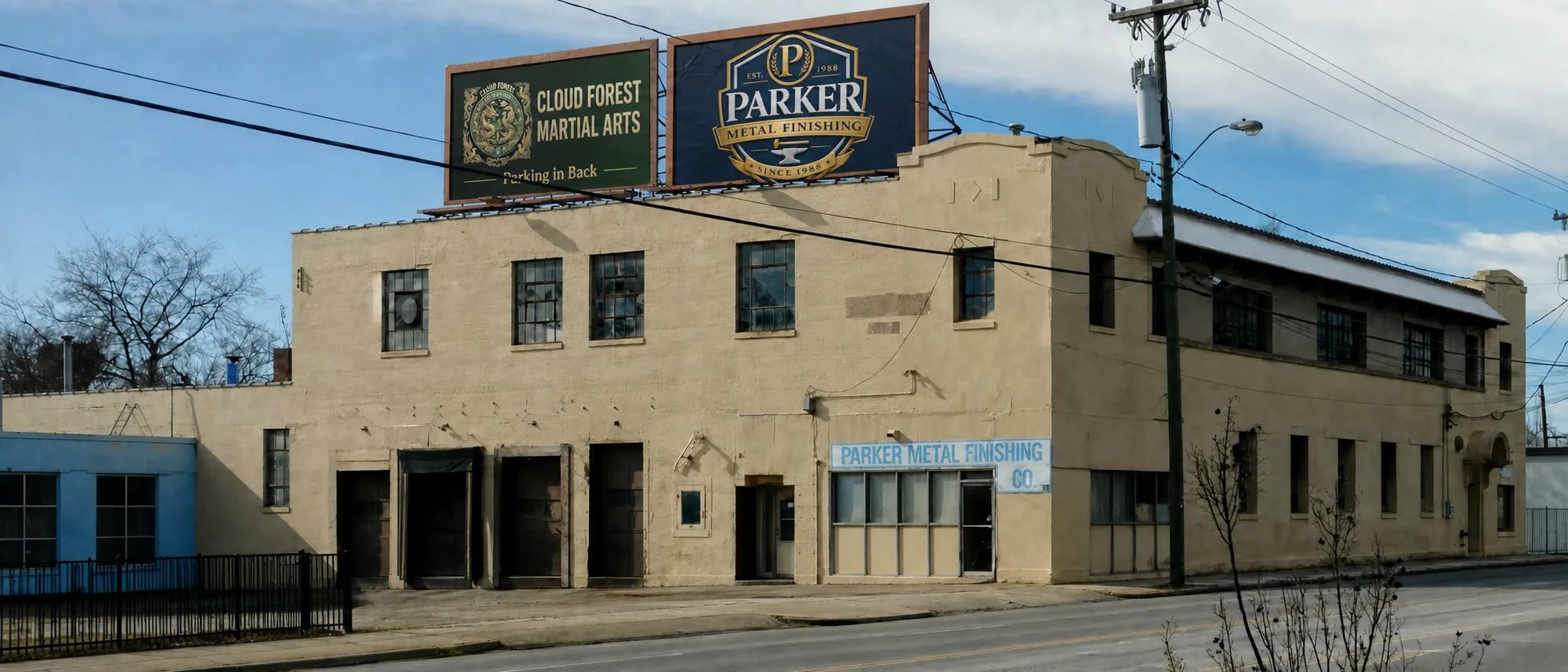
The Parker Metal Finishing building at 719 W. Gate City Blvd, Greensboro, NC
The plant · 719 W. Gate City Blvd
Map & directions